THE HARE AND THE HYENA
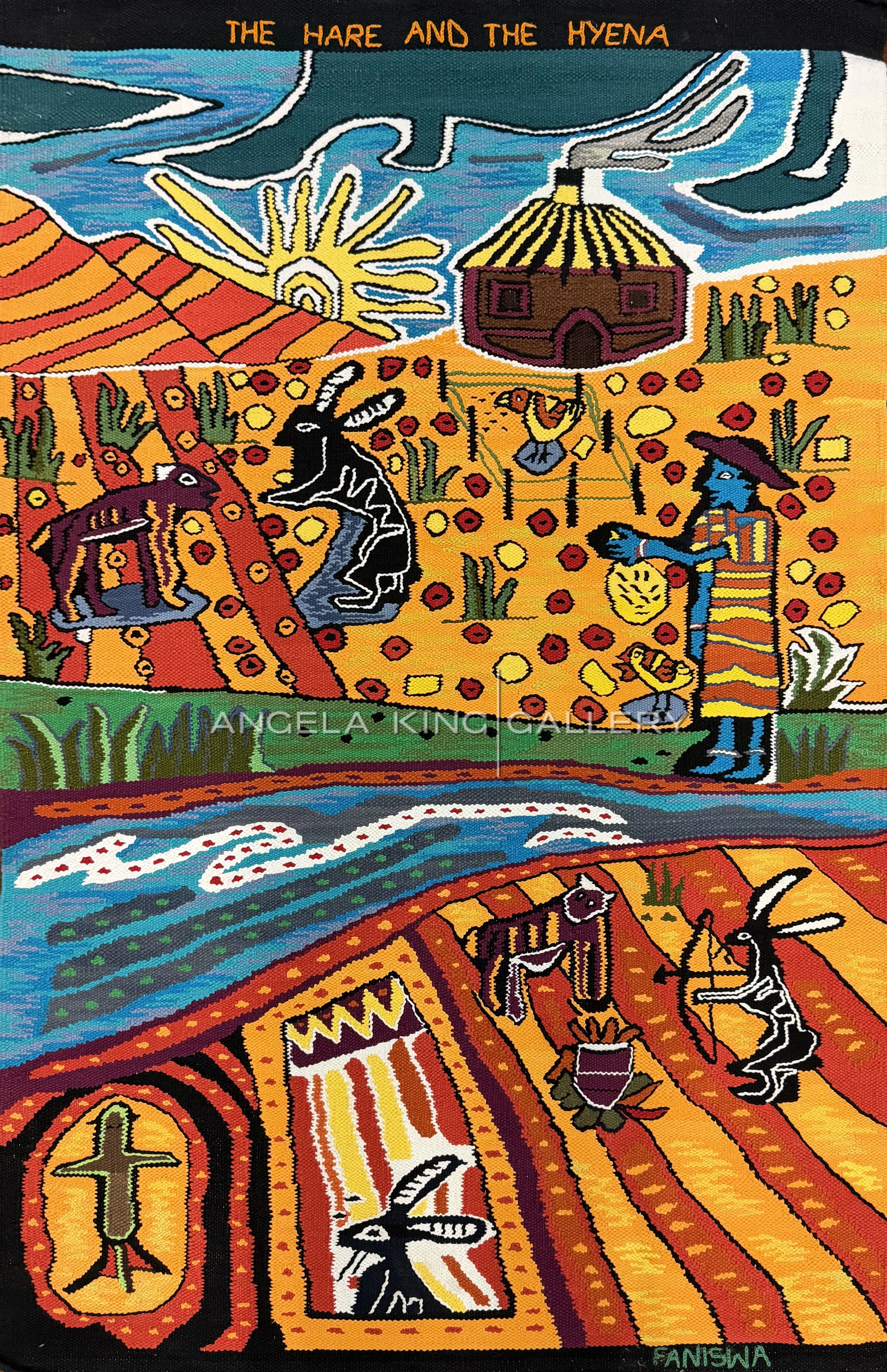
Malawi (Bantu) 69” x 45” Woven Cotton Artist, Faniswa Mahote
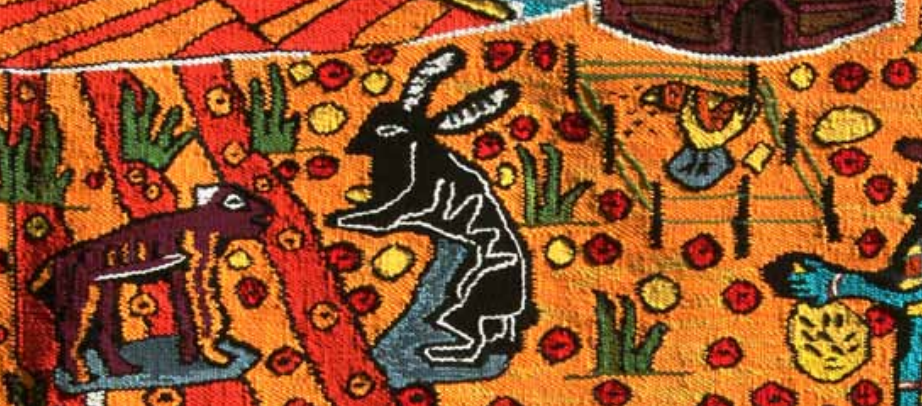
During a time of famine, Hare and Hyena were thin and hungry. While traveling together, they came upon a farmer whose workers had left to care for their families. “We will work for you,” Hare offered, “if you will feed us.” The farmer agreed and gave them a pot of beans to cook while they worked in his fields. When the beans were nearly ready, Hyena told Hare that he was going to the river to wash. But once he was out of sight, Hyena removed his skin. Without it, he looked like a terrible, skinless creature. He ran toward the cooking fire. Hare saw the frightening figure approaching and fled in terror. Hyena sat down and ate the entire pot of beans. Then he returned to the river, put his skin back on, and came back pretending to know nothing about what had happened. When Hare returned, Hyena accused him of eating the beans. The next day, the farmer gave them another pot of beans. This time Hare decided to make a bow and arrows so he could defend himself if the strange creature returned. Hyena offered to help him make the bow. Pretending to improve it, he secretly weakened the wood. When Hyena went to the river again and returned disguised as the creature, Hare drew his bow. But it snapped in two, and Hare once again ran away. Hyena ate the beans. By then, Hare had begun to suspect the truth.
That night, while Hyena slept, Hare secretly made a strong new bow and several sharp arrows. He hid them nearby and waited. The next day, Hyena repeated his trick. He went to the river, removed his skin, and returned as the frightening creature. This time, Hare was ready. He seized his hidden bow, took careful aim, and released an arrow. It struck the creature, and Hyena fell dead. Hare approached the body and discovered the truth: the terrible creature had been Hyena all along. At last, Hare could eat his meal in peace.
Moral of the Story:
Greed and deception may bring temporary rewards, but they eventually lead to ruin. Patience, intelligence, and careful observation can overcome even the cleverest trickery.