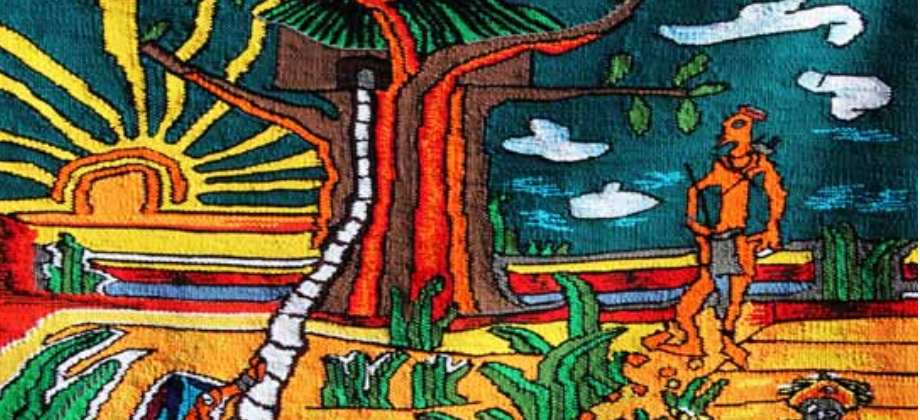

THE CHILDREN WHO LIVED IN A TREE HOUSE
Wakamba Folktale — Kenya 67” x 45” Woven Cotton Artist, Noluvuyo Miki
Long ago, a hunter was left to care for his three children after their mother died. Because he often had to travel far into the wilderness to hunt, he worried about how he could keep his children safe while he was away. Nearby stood a great baobab tree with a wide trunk and strong branches. The hunter decided to build a home high among its branches. He carved wooden pegs into the smooth trunk so he could climb up and down. Then he built a small house in the branches and made a rope ladder that could be pulled up whenever the children were alone. Before leaving, he gave his children one important instruction. “Never lower the ladder for anyone unless you are certain it is me. When I return, I will call out our secret words: Musili-musilope! Only then should you let me in.” The children listened carefully. Each evening, their father returned from hunting and called the secret words. The children lowered the ladder, and he brought them meat and water. But a witch who lived nearby had been watching them. She learned the secret words and decided to trick the children. One day, while their father was away, she stood beneath the tree and called, “Musili-musilope! Lower the ladder!” The children recognized that something was wrong and refused to let her in. Angry, the witch went away and used magic to change her voice. When she returned, she sounded exactly like their father. The children were fooled. They lowered the ladder, and the witch climbed into the treehouse, seized the children, and carried them away to her cave, where a fierce baboon guarded them. When their father returned and found his children gone, he searched everywhere but could not find them. At last, he went to a wise old man who knew good magic. The old man used his knowledge to discover where the children had been taken. The hunter followed the path to the witch's cave. At nightfall, he called out the secret words once more. The children recognized their father's true voice and cried out. The witch rushed from the cave, but the hunter was ready. With his bow and arrows, he defeated her and rescued his children. When the witch died, the hunter followed her final instructions and threw her little finger into the fire. From the flames came the people she had harmed in the past. They were finally free. The hunter returned home with his children, and they were never again separated.
Moral of the Story:
Listen carefully to those who protect you, and never trust appearances alone. Wisdom, caution, and perseverance can protect us from deception and danger.