THE CALABASH CHILDREN
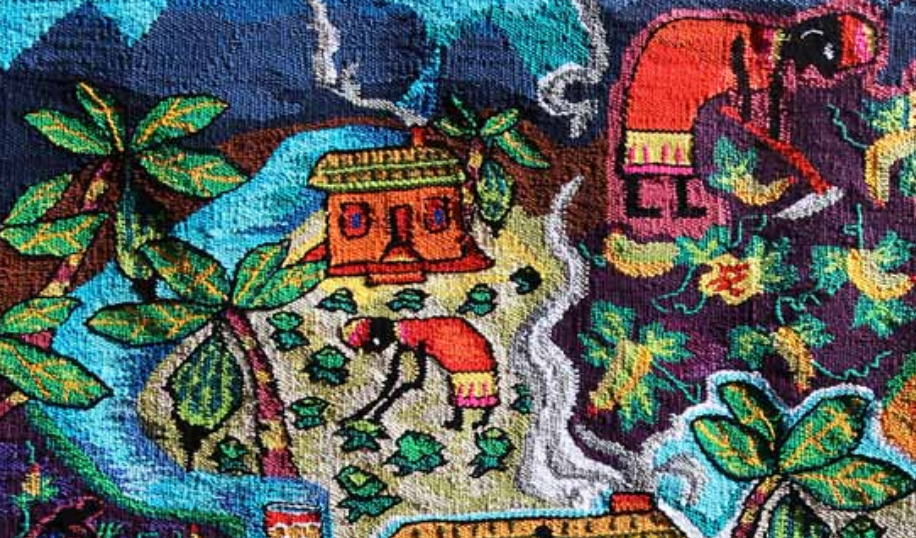
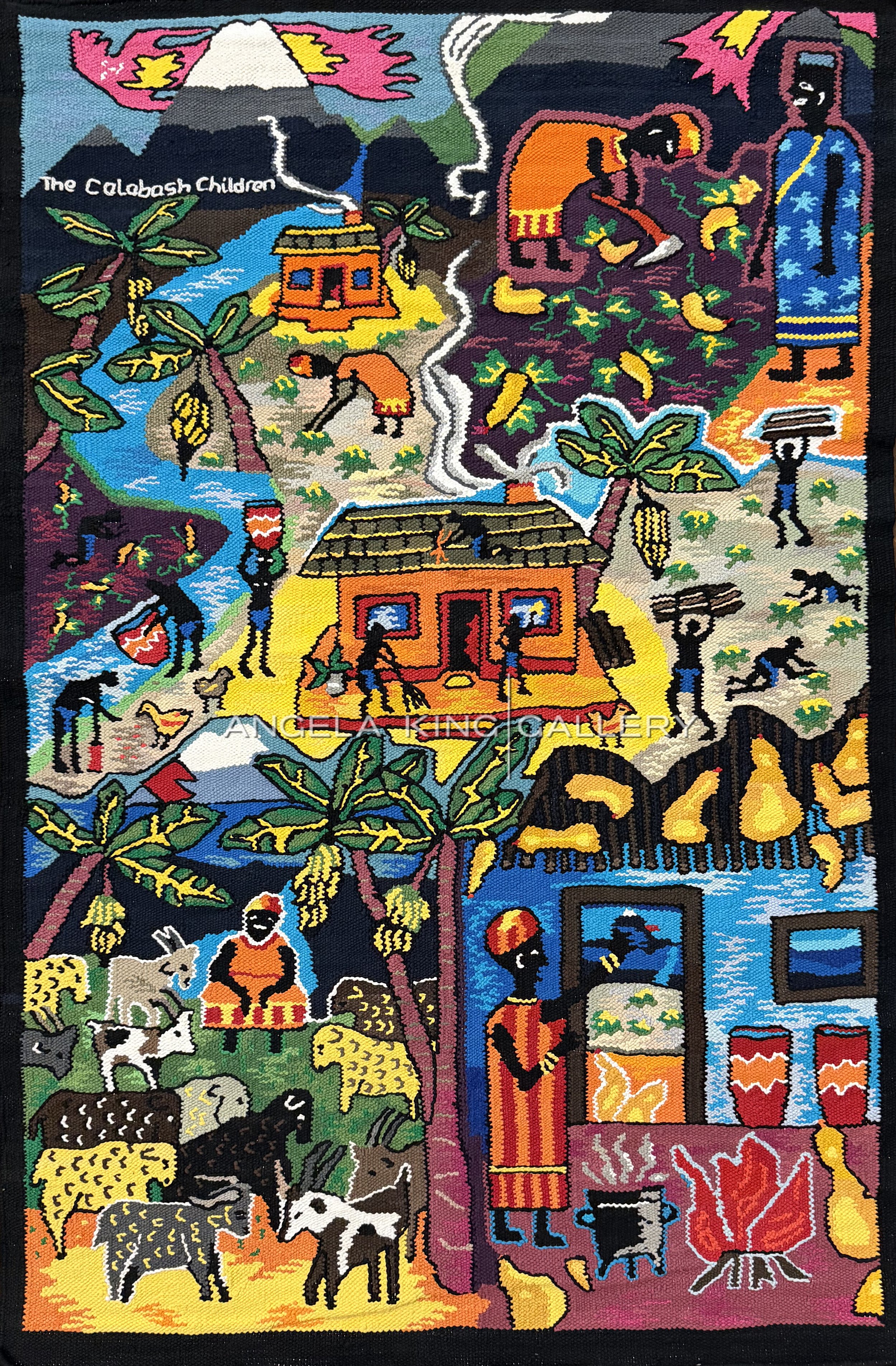
Chaga Folktale — Mount Kilimanjaro, Tanzania 45” x 67” Woven Cotton Artist, Modutsane
Retold from a folktale of the Chaga (Chagga) people who live on the slopes of Mount Kilimanjaro in Tanzania, which to them is a sacred mountain. Long ago, at the foot of Mount Kilimanjaro, there lived a widow who had neither husband nor children. She worked hard tending her fields and banana trees, but she was lonely. Each morning, she prayed to the Spirit of the Mountain to bless her with a family. One day, while planting gourd seeds, a mysterious stranger appeared before her. “I am a messenger of the Mountain,” he told her. “Your prayers have been heard. Take good care of the gourds that grow here, and good fortune will come to you.” The stranger disappeared, leaving the widow puzzled. Still, she followed his instructions.
The gourds grew large and healthy. When they were ripe, she harvested them, dried them, and placed them among the rafters of her home. One particularly beautiful gourd she kept near the doorway. Then something magical happened. The gourd by the door transformed into a boy. The gourds in the rafters transformed into children as well. The children called to one another and hurried outside to help the widow. They fetched water and firewood, tended the crops, cleaned the house, and cared for the animals. Only one child, named Kitete, remained quiet and did little work. Whenever the widow returned, the children quickly climbed back into the rafters and became gourds again. The widow was amazed by the good fortune that had come into her life. Her crops flourished, her animals multiplied, and her home was always clean and cared for. Eventually, however, she discovered the children's secret. Instead of thanking the Mountain Spirit for the mysterious gift, she decided to keep the children for herself. She welcomed them into her home and declared that they were now her children. For a time, they lived happily together. But the widow became increasingly frustrated with Kitete, who remained quiet and seemed unable to help with the work. One evening, Kitete accidentally dropped and broke the family's pot of stew. Furious, the widow called him useless and worthless. “You are nothing but a calabash!” she cried. At those words, the magic was broken. The children vanished, and only ordinary gourds remained. The widow realized too late what she had done. She had been given a miraculous blessing, but because she could not appreciate what she had received—and because she judged Kitete by what he appeared to be—she lost it all. She remained childless for the rest of her life.
Moral of the Story:
Do not judge a gift—or a person—by its appearance or usefulness. Be grateful for the blessings you receive, for what seems insignificant may be the most precious part of the gift.